Monday, June 28, 2010


WEEKEND RESULTS: LOVELAND AND IRONMAN

Another great weekend of racing for MHM athletes locally and throughout the country.  

Loveland Lake to Lake:

It was great seeing so many of you in Loveland.  This has always been one of my favorite local races and Peggy always puts on a great race in a great venue.   Sydney, Max, Jeff, Michelle, Angela, Krista, Megan, Sean, Brent and Chuck had great races on a perfect weather day.  
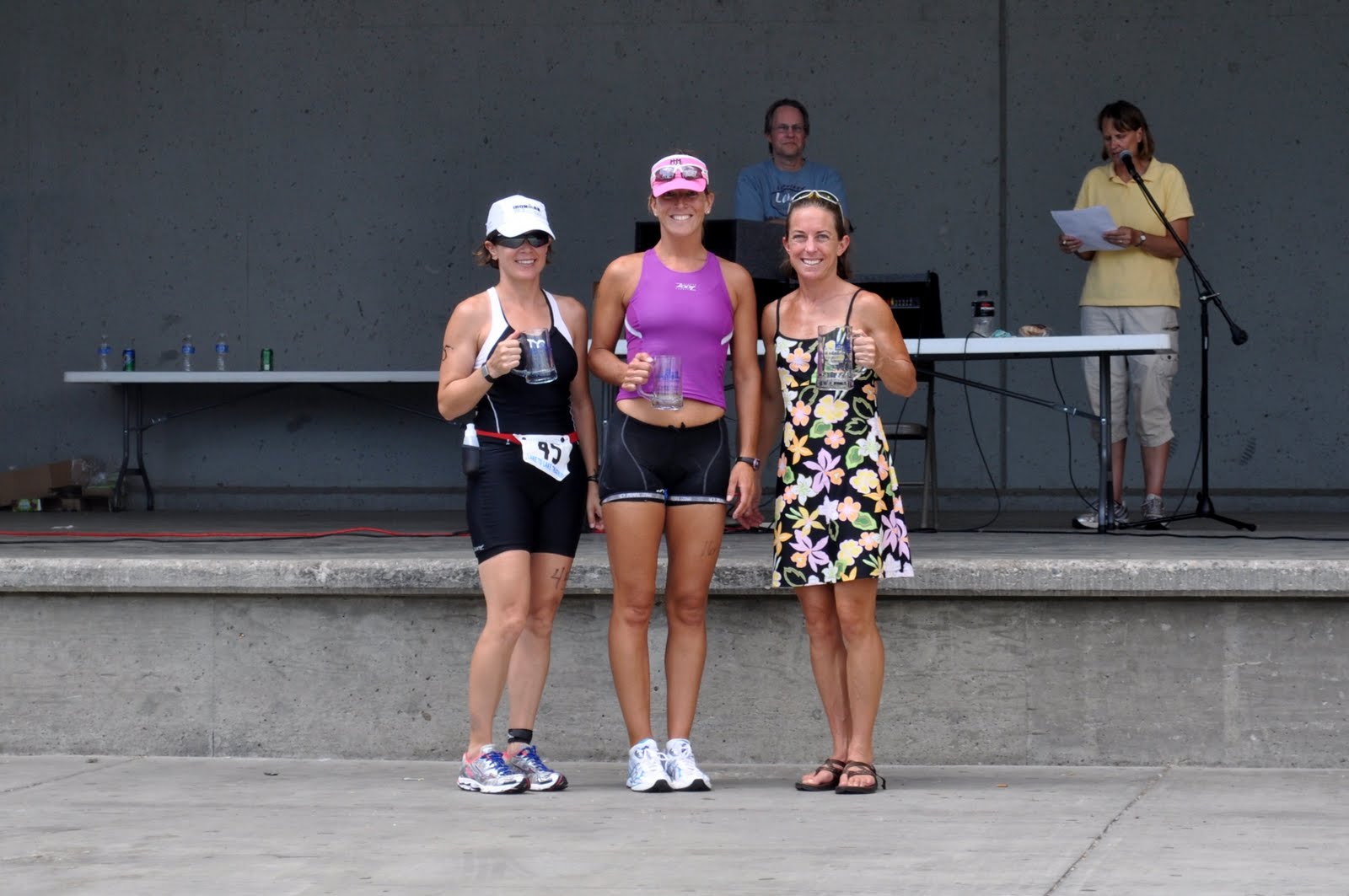
Sydney was 1st in her age group, 1st overall masters and 4th women overall!! Not bad for someone who entered the night before the race.  Max and Jeff took 3rd in their respective divisions and Michelle took 2nd in her age group while completing her first Olympic distance race (she has only finished 14 Ironman's but never an Olympic?).

                                                           IRONMAN


MHM athletes/coaches Kathy Alfino and Julia Rossi had great days at IMCDA.  Kathy was completing her 7th Ironman and Julia her 2nd.  The two trained together, along with Kelli Lear-Kaul (who is not an MHM client) and had high expectations going into the event. Kathy was aiming to qualify for kona for the third time and this years event falls on her 50th birthday.  Julia, who had already qualified for the Ironman World Championships back in May was looking to hit the Ironman podium for the first time.
I'm happy to report that all three ladies had outstanding days.  Kathy won her age group and set the tone with a blistering 5:37 bike split.  Julia took third in her age group and was only slightly deterred by a bike accident which sliced open her calf requiring stitches post race. With Kathy earning her Kona slot, this brings three MHM athletes (Sydney Cornell) heading to the Big Island in October.

Monday, June 7, 2010

Honu 70.3, Kansas 70.3, Metro Brokers, Boulder Sunrise and HRCA Tune Up triathlon


Photo:  Paul Fitzgerald

Congratulations to MHM athletes who raced this weekend in Kona, Boulder, Highlands Ranch and in Kansas.  John McGrath set a 40 minute Personal Best at Honu 70.3 despite some nasty blisters (I unfortunately got the photos, Thanks John).  Dave Evnas, completed his first 70.3 in Honu as well. John Mix and Paul Fitzgerald set personal bests at Kansas 70.3 while Donnie Spurgin completed his first half. . Cindy Beyer dropped 12 minutes at the HRCA Tune Up Tri and John Herring took off 10 minutes. . Julia Rossi won her age group and was the second women overall (she then went on to bike 5 hours in preparation for IMCDA). Liz Whitfield set a personal best and won her age group (6th overall) at the Boulder Sunrise triathlon.  I know I missed a few other folks who raced this weekend and I apologize if I omitted your name.

MHM Youth Triathletes Shine (HRCA Kids Triathlon, Longmont Yout Tri)


HRCA Kids Triathlon/Longmont Youth Triathlon:

Congratulations to our Youth Triathletes who competed at both the HRCA and Longmont triathlons this past weekend.  In total, we had 9 kids participate with two special needs kids finishing as well. Special thanks to coach Julia and Lauren for assisting in getting the kids prepared. 

Saturday, May 29, 2010

Ironman Florida 70.3

Congratulations to John Herring on the completion of his first 70.3 race in Florida!! Next year you double the distance and double the fun (pain).  Nice work to John and Coach Scoty Graber.

Wednesday, May 26, 2010

Swim Clinic

Photos: Matt Beck top, Below, Tara Riggs and Kristine Rauerhorst (Ironman Canada 2010 entrants)

On May 21, Matt Beck, six time All American from the University of Texas swim team and  Mile High Multisport swim consultant, conducted a swim clinic for MHM athletes. Matt covered the basic of swimming more efficiently in the water covering topics related to body positioning, front quadrant pulling, catch/release, hand entry/exit and proper breathing techniques.  All who participated gained valuable information they can use during pool and open water swimming.  Thanks Matt for donating your time.

Tuesday, May 25, 2010

Youth Triathlon Race season is under way


This year, MHM has become more involved in youth triathlon groups and coaching.  With a mission to increase youth participation and knowledge we have developed our own Youth Elite team and created training camps.  We have also partnered with the HRCA to coach kids camps geared primarily to the Highlands Ranch Triathlon series.  In addition to the Highlands Ranch series, our kids are preparing for Iron Kinds races in Boulder and Avon, Tri The Rock, Longmont youth triathlon and the Fall Frenzy Youth race.

To find out more about our youth training programs click here.

Thursday, May 6, 2010

Ironman Saint George/Ironman 70.3 Galveston/Ironman 70.3 St. Croix


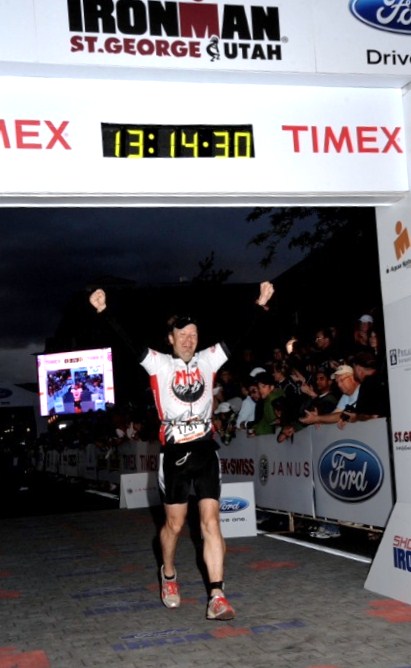
Congratulations to Mike "Veto" Vetowich on completing Ironman St. George this past weekend.  Veto finished his first Ironman and was coached by Sydney Cornell. 

Also pictured above is Mile High Multisport coach Kathy Alfino. Kathy won her age group at Galveston 70.3 a few weeks back.  Next stop for Kathy, Julia Rossi and Jackie Nunes is Ironman Couer d' Alene in June.

Mile High Multisport would also like to congratulate Liz Whitfield on setting a personal best at the St. Croix 70.3 this past weekend.

We have hired some new coaches. If any of you know of anyone looking for triathlon, running or cycling training plans, please have them contact Pete Alfino  

Saturday, April 24, 2010

Improve Your Running: Simple changes will yield big results (part I of II)

Improve Your Running
Simple changes that will yield big results
By Peter S. Alfino


Part I of II


Improving your running form and increasing your speed can be accomplished with a few simple changes to your training plan and your mental approach to who you are as a runner. I hear all the time “I can’t run because it beats up my body”. Running doesn’t beat up your body, poor form and instabilities beat up your body. By improving your core strength and hip stabilization with functional training your will improve your body’s ability to load and unload as you run. Additionally, simple changes to the way in which you carry  your arms, lean your body and foot strike can make a big difference in your performance. The last component to running fast is your mind. Running is a state of mind, think you are slow runner and you will be slow.

Functional Training to improve your body’s ability to handle stress

Think about the force which moves through your body with each stride you take. Your body’s weight is supported on one foot while in motion. Running is a horizontal transfer of body weight and a number of muscles are recruited during this process, a few are listed below:

Quadricep (which are made up of 4 muscles and are involved in hip flexion and knee extension)

Hamstring and Buttocks (again 4 major muscles which also move 2 joins, hip extension and knee flexion)

Gastrocnemius and Soleus (which are involved in the movement of the knee and the ankle).

Core: Includes muscles of the torso with back, and abdominal muscles, (Rectus Abdominis, External Abdominal Oblique, Internal Abdominal Oblique and Transversus Abdominis) the hip and thing muscles. It goes without saying that these muscles are important as a structural foundation for the movement of the body when running.

Basically put, we need to strengthen the muscles mentioned above in order to become more stabile when we run. One of the most common faults I see when watching runners is “dropped hip”. The supporting muscles are not strong enough to place the body in proper position and the hip drops causing misalignments and causes stress. Eventually, something wears down from always having to compensate and injury occurs.

By improving core strength and incorporating exercises with movements which always connect one body part to another (another reason I am a big advocate of the TRX (http://www.fitnessanywhere.com/sfnt?AFFIL=yio8dP38) we improve our bodies coordination and ability to handle the stresses placed on it while running. For our clients who don’t use the TRX, I have them complete a simple routine which emphasizes core and hip stabilization. In addition to the functional strength and stabilization work, incorporate running drills and have your running form analyzed by your coach and in a short period of time you will notice improvements in your running form and post run fatigue.

Body Positioning:

I’ve analyzed a number of runners over the years and without question, very few people think about the way they carry their arms, lean their body or how their foot strikes the ground, recovery or where they look. Some of these are quick fixes, while other require changing muscle memory patterns. Through video and still picture photos you can get a good idea of what you look like when you run (contact me if you are interested in having your running analyzed). Running drills can change the way in which you run and should be incorporated into your training as part of your warm up and as standalone workouts. If you do not have a standard warm up which includes muscle activation and running drills you aren’t assisting yourself in becoming a more efficient runner and are increasing your risk of injury.

Some points to keep in mind when you run:

• Lean from your ankles, don’t bend at your hip. Your vertical lean should be 10% (think falling forward)

• Arms are held at 90’s and the elbow move straight back and forth. Your arms provide balance and should be relaxed (same thing with your hands)

• Your gaze is 10-12 yards ahead (not at your feet and not at the horizon)

• Shoulders remain relaxed and don’t rotate while you run

• Land mid foot (I will cover the foot strike in Part II of this article)

For the Mile High Multisport athletes reading this article, the coaches tips section in your workout log account covers specific core work (including pictures and descriptions), a running stabilization routine (pictures and explanation as well), muscle activation and a proper warm up routine. Spend more time “thinking” about your running as opposed to just doing.  It will take time to change muscle memory, but with some dedication and a willingness to change, anything is possible.

In Part II of this article, I will go into more detail on foot strike/recovery, pacing strategies and having the proper mind set to become a faster runner.

Pete Alfino is a level II certified triathlon coach and the founder of Mile High Multisport, LLC. Pete and his coaching staff provided individualized training plans for triathletes from beginners to novice. Pete also conducts private swim ad run analysis.  Contact Pete Alfino

Thursday, April 8, 2010

Congratulation Mile High Multisport All Americans for 2009


Photos:  - Jeremy Anderson    Sydney Cornell   - Julie Thelen Hsu  Kathy Alfino Daniel Madruga

Mile High Multisport would like to congratulate our athletes who received All American status for 2009.

Jeremy Anderson from Chicago highlighted his season by being the 2nd American in his age group at Olympic worlds held in Australia.  His time of 2:02 was a personal best.  This was Jeremy's third season in a row of achieving All American status.

Coach Sydney Cornell had a banner season with highlights coming at buffalo Springs 70.3 where she won her age group and qualified for the Ironman World Championships.  She had a second place age group finsih at Steelhead 70.3, 19th place finish in her first Ironman in Kona and then was 5th overall female and 2nd in her age group at Ironman Arizona.

Julie Thelen Hsu highlighted her year by being the female overall winner at the Rattlesnake Sprint and also had a podium finish at the 5430 sprint. Congratulations Julie!!

Coach Kathy earned her third straight All American honors with podium finishes in every race she entered last year.  She started the year at Rage in the Sage by taking 3rd, then won her age group at Loveland, Boulder Peak (by 5 minutes) and Rattlesnake. She ended the year with a second place finsih at the Wild on Windsor race.

Daniel Madruga achieved Honorable Mention status.  Considering, Daniel spent the better part of last fall/winter recovering from a serious bike accident, this was a tremendous accomplishment.

In addition to our All Americans, Julia Rossi,  and Katey Morris missed Honorable Mention rankings by less than 10 place.

USAT Rankings for 2009 click here

Overall, it was another great season by all our athletes. We look forward to everyone achieving success in 2010.

Tuesday, January 5, 2010

2010... Some points to ponder


New Years has come and gone and I'm sure that most of you have formulated some type of resolution for the upcoming year. Resolutions take on different faces and I'm confident most people don't follow through on their commitments or put much thought into meaningful goals and objectives for the following year. The definition of insanity is doing the same thing over and over and expecting different results. How much time did you really put into your resolutions for this year and how will you hold yourself accountable. For 2010, I contacted another small business owner (outside of the triathlon world) and asked her if I could share with her my business plan/monthly objectives and if she wouldn't mind having a monthly conference call to discuss my progress each month. I purposely selected someone who I know will hold me accountable should I stray. I also established different goals for my business and personal life. Self Discipline and motivation will be the foundation of my success in achieving success in 2010. I plan to stretch myself beyond my comfort zone and although failure is a possibility, I know that we learn more in our defeats than our victories.
As I was sharing some of the motivational articles, which tend to float around at this time of year, with others, I received one back which I felt all athletes could benefit from. The speech from Tony Blair, the former Prime Minister of The United Kingdom was given during the Olympics. As I read his speech (which I've included below) and reflected about the athletes I've interacted with over the years there are many similarities between those who have achieved great things and those who do not. If you spend time listening to those who have done well in relation to their circumstances (note that doesn't mean winning) there are a lot of similar qualities. Although all of his points hit home, as a coach the biggest obstacle I see athletes dealing with is is not being afraid to fail. Too often, athletes go into races worried about falling apart instead of laying it on the line and accepting the outcome. If you have done the work up front, don't throw it all away because you are afraid to say I tried my best and came up short. Take some time to reflect on the following points and do some reflection. Ask a friend, coach or a family member to read the article and to give you some feedback on what they hear and see in you.

7 Characteristics of a Champion
1. Success comes to those who strive. Striving is a better concept than merely being competitive. Striving is more than wanting to be the best. It means even if you are the best, you are striving to be better. It is the product of a spirit that is restless for still greater things. It can mean a state of perpetual dissatisfaction, certainly with yourself.
Of course, it shows up in a strong competitive streak when in a race. But it is also an attitude that illustrates that the competitor is as much competing with himself as with others in the same race.
2. Champions are creative people. They are innovative. They are always pushing to the new frontier. They don't accept the "givens" of any field of endeavor. They challenge them. They are non-conventional people. Creative people challenge the parameters. They go back to the first principles of a subject. They ask not the superficial but the profound questions.
3. Champions are endlessly inquisitive. They are always searching for new insights, for original thinking, for something that makes me think anew and afresh. This also means knowing you can be wrong. You may have to re-think, and possibly radically. The characteristic of a champion is that they are prepared to do so.
All of this takes application and hard work.
4. The fourth quality is therefore self-discipline. That is more than just the hours you put in. But it is the discipline to lay aside other pleasures and concentrate hard on your own development. It is about focus and single mindedness. It is not just about deciding to work rather than spend an extra hour in the bar. It is about absorption in your task, about deep not shallow thought, about getting down to the core of what you are trying to achieve. It is about not accepting second best; about knowing in your heart, when something is not good enough and can and should be better. Notice that this is self- discipline. Past a certain point, you and only you can provide that intensity of will.
5. The fifth quality is courage. No champion is without courage. It may be physical, it may be intellectual. It may be of mind or body.
Courage is invariably found in a champion. Inevitably a champion is out in front. Championship is like leadership. When things are in the balance, when you cannot be sure, when others are uncertain or hesitate, when the very point is that the outcome is in doubt; that is when a leader steps forward. The courage lies not in acting without fear; but in acting despite fear.
Such people are the people who are prepared just to go for it; to back their instinct when their instinct is all the certainty they are going to get. Taking the uncalculated risk is just foolhardy. But a calculated risk is still a risk. Calculate too much and you miscalculate. You wait for the perfect moment when such moments rarely if ever exist. At a certain point you have to step forward, with an insecure terrain beneath your feet.
6. What this means is that you must also be prepared to fail. This is the sixth and possibly the toughest quality of all. The strange irony of the champion is that the champion must be able to live with failure as well as enjoy success. The very act of courage, of leadership that sees you step out into the unknowable, carries with it the possibility of defeat. You must be willing to be humbled as well as exalted. You must accept that the risk, however calculated, may not pay off.
One of the most common reasons why people don't strive is the fear of failure. Yet virtually no one I have ever met who has succeeded, has not failed first. The question is what you learn from the experience, what you learn not just about the process of competing, but about yourself, the strengths you should exploit, the weaknesses you must eliminate.
7. If you are to be a true champion, you must be motivated by more that "you". If the striving is purely selfish, if the love of personal achievement is purely the personal glory, something is missing; some aspect of championship that is elusive in definition but critical in action, Some people may see this in spiritual terms; that is one way of looking at it. Another way is simply a belief that to achieve to the highest level and beyond, to extend the frontiers of human knowledge or activity, is in and of itself, something good or worthy, noble even; that fulfils a purpose beyond your own recognition of your own self worth.
The true champion is not just a winner. He or she is a person of compassion, of humanity, motivated by a sense of obligation to others as strong as the will to succeed for themselves.